


Description
Tanzania’s coffee story stretches back to traditions that predate “coffee as a drink.” In parts of the country, coffee fruit was historically used as a chewed food and in cultural exchange long before colonial powers pushed coffee into export production. German colonists drove Arabica expansion, and later British administration sought to formalize the industry. By the early 20th century, farmers were already organizing into cooperatives to improve market access an approach that still shapes Tanzania’s supply chain today.
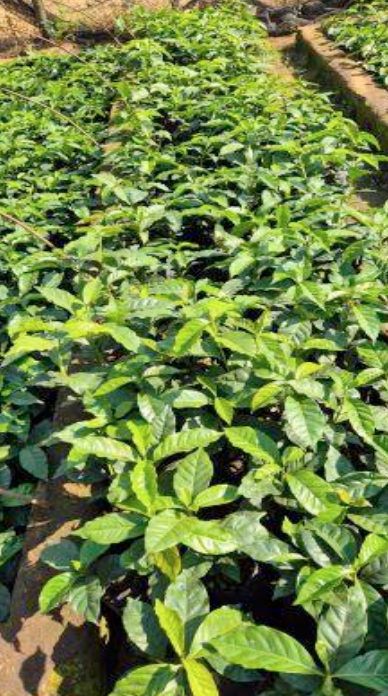
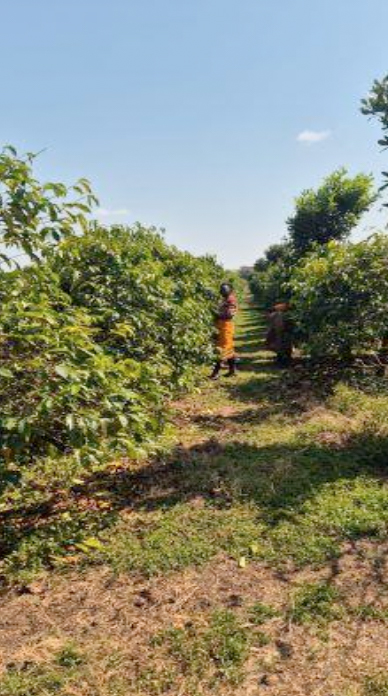
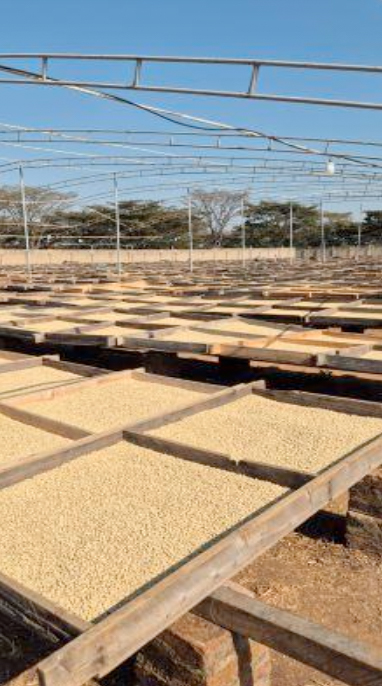
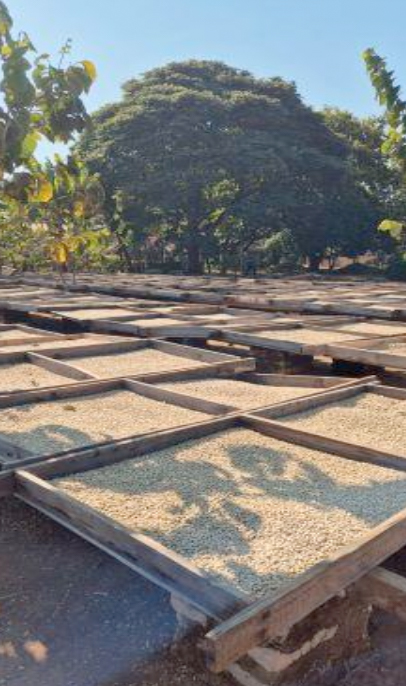
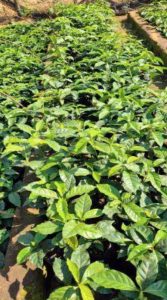
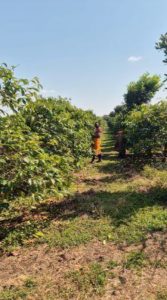
This lot comes from Kanji Lalji Coffee Estate in Igamba, Mbozi. The estate was acquired in 1956 and spans 904 acres. About a decade ago, the farm launched a major redevelopment after yields had fallen to under three tons removing older trees and re-establishing coffee through replanting and rehabilitation to reach 165 hectares. Current production is around 158 tons, with projections to grow substantially in the coming years. Early in its modern production history, the estate also earned a national quality award for top estate-class coffee. Microlots in Tanzania are selected for standout cup quality and are typically traceable to the receiving and processing level. In the south especially, many producers are organized through AMCOS (Agricultural Marketing Cooperative Societies), which centralize cherry delivery and processing. Coffees are blended and sorted first, then separated by quality; microlots represent the highest-scoring selections pulled from larger day lots.
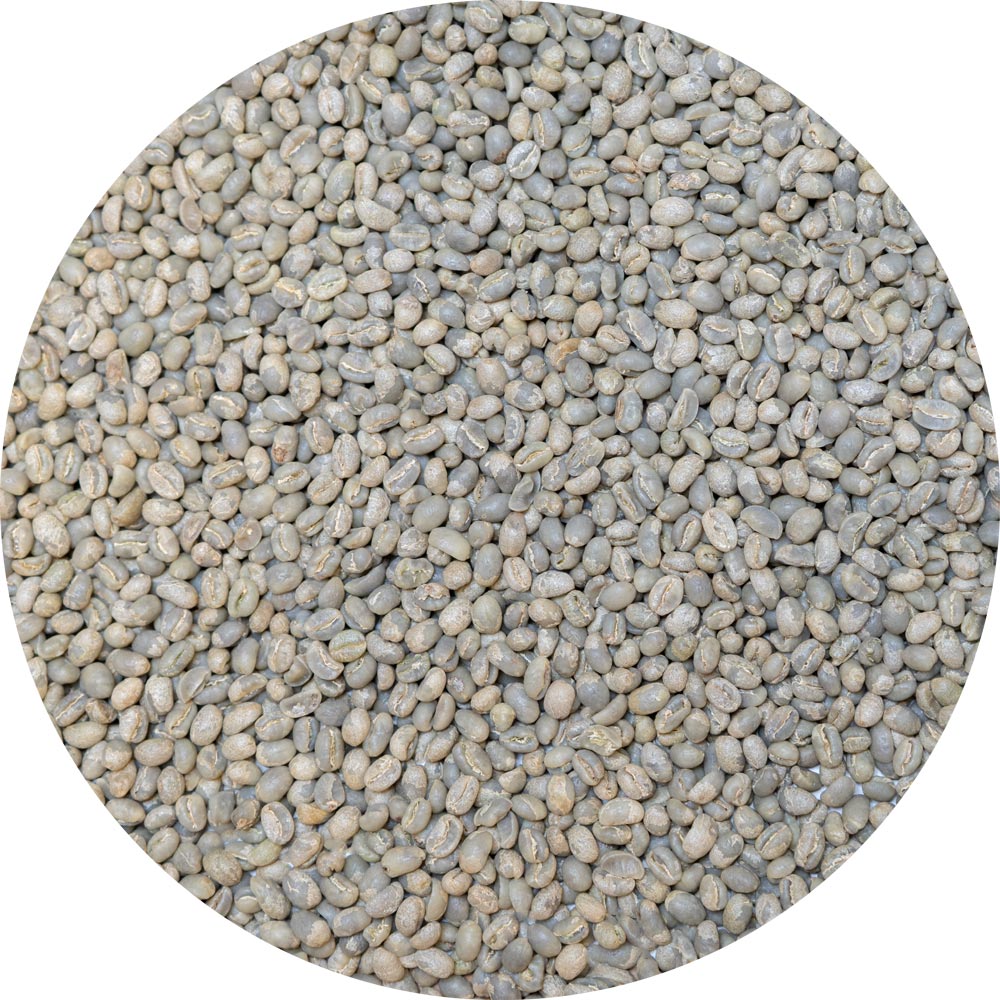
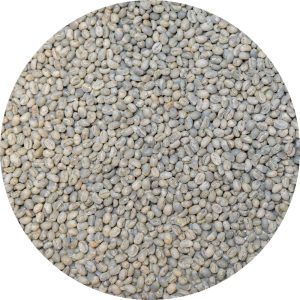
What is a PB (Peaberry)? A peaberry forms when a coffee cherry develops a single rounded seed instead of two flat seeds. They’re naturally limited in volume and sorted out separately, often valued for their uniform shape and roasting consistency.
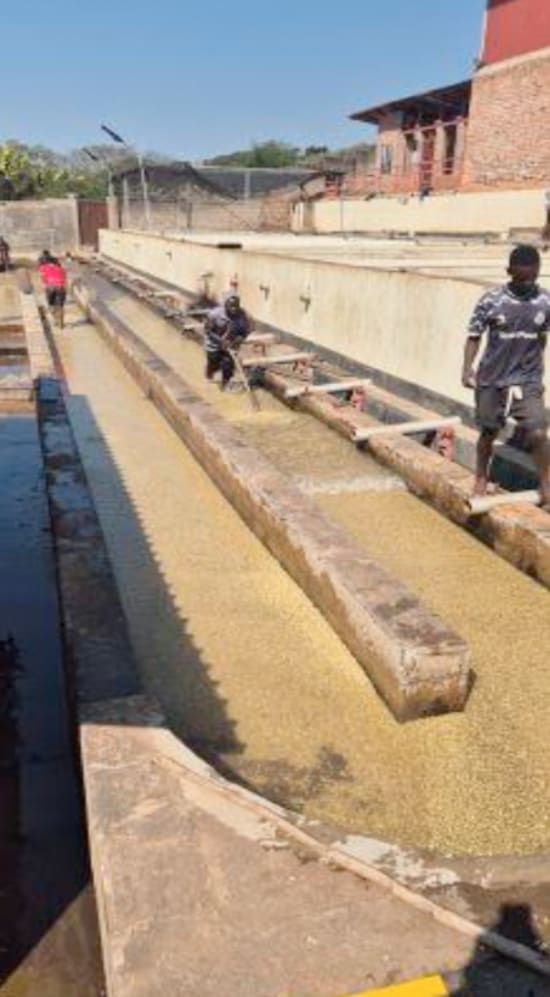
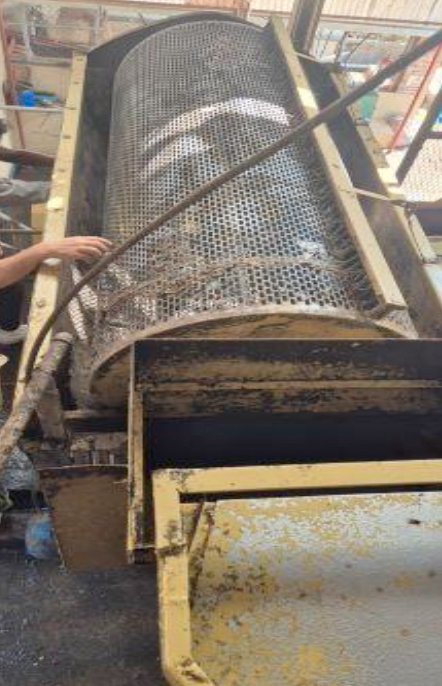
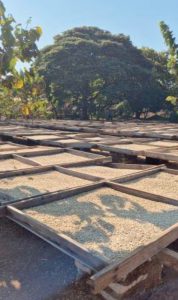
Process & details: Washed (mechanically demucilaged, rather than long fermentation typical of fully washed Tanz coffees), processed with an eco-pulper approach designed to reduce water use. Grown at 1548 meters in Mbozi (Songwe region, near the Zambian border). Varieties include a regional mix of Blue Mountain, Bourbon, Kilimanjaro, Luwiro, and other local heirloom types. Harvest windows generally run May–September in the south and July–November in the north.
Tasting Notes: An interesting and complex Tanzania Peaberry, best from light to medium roasts, but works darker as well. At lighter roast points it grabs your attention right from the start with a vibrant and juicy acidity, slightly higher than usual, with hints of sweet orange and lemon. The crisper cup profile gives the cup a lot of lively flavor depth including it more potent deep chocolate and cocoa notes, accompanied by a classic African spice note, an herbal nuance clearly reminiscent of black tea; far from clashing, this herbal touch creates an excellent and highly appealing interplay of flavors in the cup. It has a medium body that accentuates and becomes denser as the temperature drops. In the background, there is a fruity sweetness, praline, and a slight hint of amaretto, resulting in a very balanced cup. Moving into darker roasts, it will lose its acidity, consequently gaining more body and intensifying its chocolate and sweet notes.
Roasting Notes: A nice medium roast will be where to start with these beans, lighter for more brightness, darker for stronger rough and tumble chocolate notes. Being a peaberry, their round shape causes them to absorb heat a little differently. If using an air roaster, a slightly smaller batch size and careful airflow will help keep the roast even. A medium roast is ideal to highlight that juicy acidity and the spicy black tea character while keeping the finish very clean. If you decide to push toward a medium-dark roast, you will deepen the cocoa and praline notes, softening the acidity a bit. For this coffee, a few extra days of rest after roasting can help the sweetness integrate much better and taste smoother; however, its acidity will be a bit brighter in the first few days right after being roasted.





Reviews
There are no reviews yet.