
Description
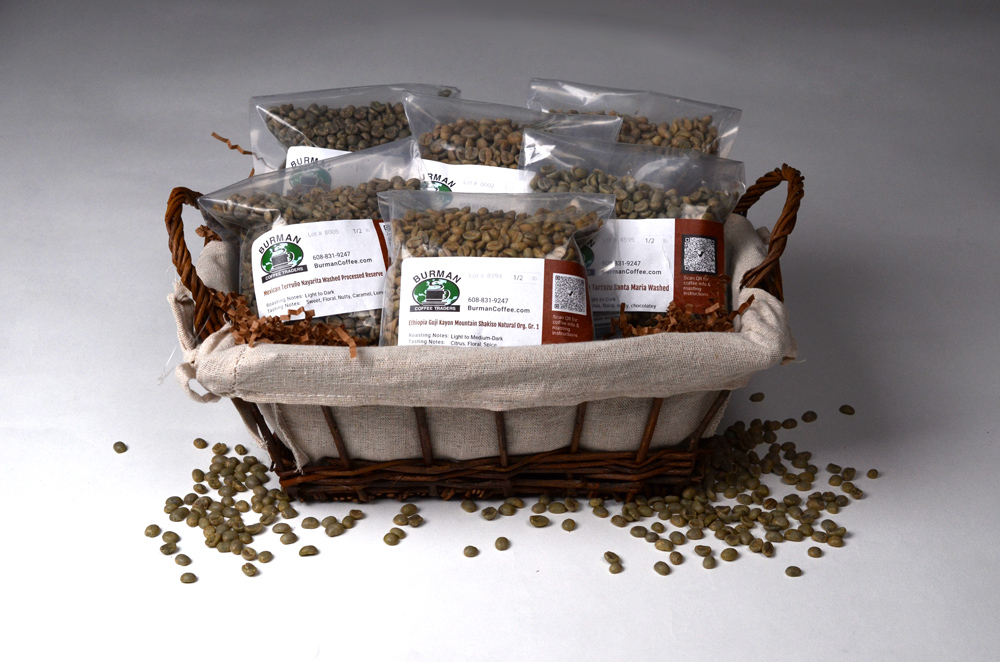
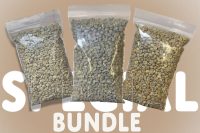
Sample some classic coffee flavor profiles from around the world! A half pound each of:
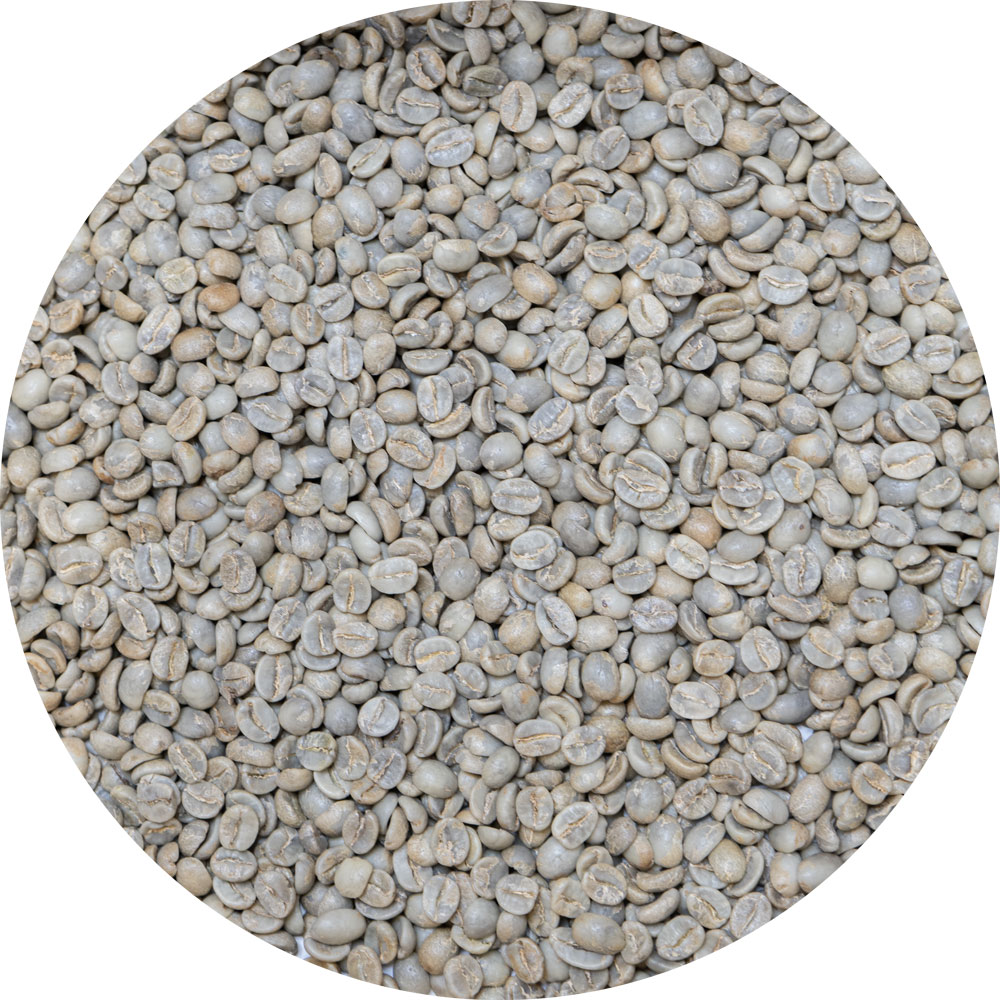
Panama Premium Boquete – Garrido Estates – Washed SHB
Garrido Estate coffee very rarely makes it to the US. Owned and operated by Jose David Garrido Perez and consists of 4 farms including the famed Mama Cata.
Located in some of the best growing territory in Panama; some of the biggest names in Panama coffee are also located in this prime territory, Hacienda Esmeralda and Elida Estate are neighbors. Since his coffee is almost always obtained by foreign markets, many in the US have not heard the name Garrido before but it easily competes with the best of the best.
This is an aggregate coffee by Jose David Garrido Perez. He has come up with awesome tasting blend of washed processed strains and lots from all of his farms.
This is a super tasty and clean washed processed coffee, a good example of traditional Panamanian coffee. Highly rated but not a competition winner, much more affordable than the natural processed boutique coffees or the single strain offerings but just as tasty in our book. Not as exotic, more classic in its tones. Produced by one of the best Panama farmers on the block!
Tasting Notes: We thought best from medium to dark roasts but works from light to dark. A clean, sweet and smooth daily drinking cup! A little fuller bodied at the light-medium roast level with a great balance between the slight winy/floral notes & nutty/malty darker tones. Similar to Guatemalan coffee. Some acidity at lighter roasts but just a hint, medium to dark roasts would be marked as low acidity. As one pushes it into the medium roast range, the very sweet nutty tones come off a bit caramel like. Still plenty malty, it will linger on the tongue. Dark roasts turn pretty strong with the sweeter malty cup profile mixing nicely with smoky and roasty notes.
Roasting Notes: An easy coffee to roast, very nice screen. Good from light to dark, pretty low chaff and pretty even roasting. Darkens up pretty quickly, will look a little darker than it is. We recommend trying it on the lighter side of a medium roast to get a nicely balanced cup.
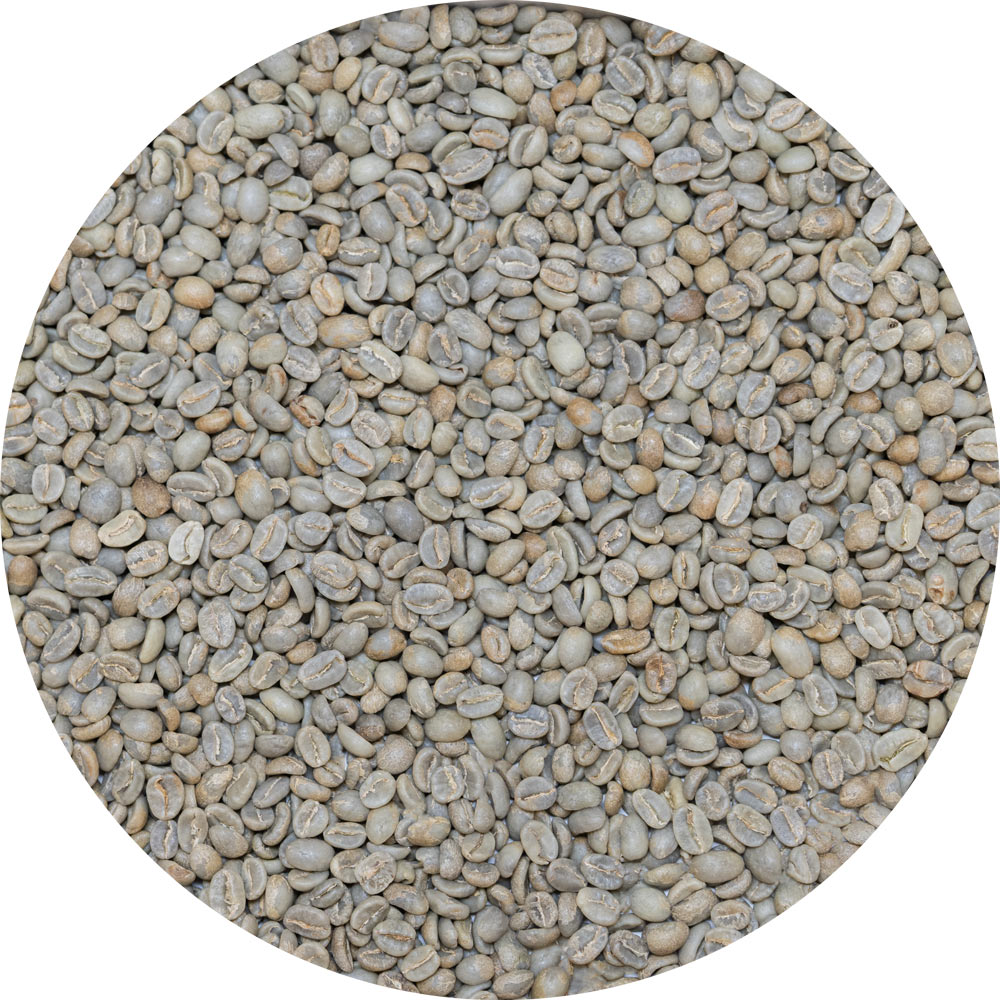
Colombian Cauca – Caldono Castillo AA – Washed Processed
A wonderful single strain Colombian top lot. Fresh and clean: a great specialty offering for light-medium roasting. Unlike traditional Colombians, this one will show some delicate acidity and slight fruit notes. Wonderful balance of tones with greater depth of flavors.
This lot comes from 7 producers with small farms in the municipality of Caldono within the department of Cauca. Joaquin Alvaro Tunubala, Hugo Hernan Trujillo Mosquera, Hector Giraldo Melo Araujo, Luis Alberto Chate Chocue, James Mosquera Pechene, Jose Betancur Patino, and Jairo Bomba each have their own micro-mill where they carefully harvest cherries, depulp, ferment, wash and gently dry the parchment.
The coffee grows between 1400 and 1750 masl on clay-rich soils, and is exported through a strong alliance with Banexport, a Colombian export company that provides warehousing, milling, technical support and cupping feedback so producers can earn better income to reinvest in their farms. The variety is Castillo, a rust-resistant hybrid developed by Colombia’s Cenicafe research center. It is an AA grade, conventional coffee, harvested from May to August and again from November to December, fully washed and dried inside solar dryers that protect it from the rain to keep the profile clean and even.
Tasting Notes: A fresh and very clean washed Colombian. Lighter roasts show a bright citrusy acidity alongside delicate fruit notes and something floral, with hints of nectarine and red fruit like raspberry, all pretty crisp but not over the top. There is also an almost white tea quality that lends elegance to the cup. Medium roasts turn more balanced and classic Colombian tasting, the acidity calms down a bit and the sweet and fruity notes round out, adding a more syrupy and pleasant base. The darker you roast, the more body it picks up and the more it leans toward sweet, chocolaty tones, with the fruit dropping into the background up until 2nd crack, where it dries out and turns smokier.
Roasting Notes: Easy to roast, an even screen of washed processed coffee with low chaff and uniform roasting. It works well across the whole range: lighter it shows off the fruity and floral notes, medium it stays balanced and very classic, and darker it gains body and chocolaty sweetness. Most will like it best at a solid medium roast, but it delivers nicely lighter or darker per your personal taste. If you are after the fruity acidity, pull it before 2nd crack; if you want more body, take it toward there.
Indian Mysore Nuggets – Extra Bold
Mysore coffees are the best known and the most popular of all Indian coffees, they possess good body and snappy acidity. The overall taste profile is very unique, with spicy overtones. These spicy overtones come from the cinnamon, cardamom, nutmeg, cloves and pepper that grow alongside the coffee trees.
India Mysore Nuggets Extra Bold is sourced from several family-owned farms from the Chikmagalur District in Karnataka, India. Many of the farms have been in operation for close to one hundred years, passed down through the family from one generation to the next. Our Mysore Extra Bold is a fully washed coffee cultivated above 1,200 meters.This lot is full bodied, with a rich full taste and moderate acidity. Very interesting and exotic, I like to roast this coffee a little darker, just into the second crack.
Tasting Notes: Indian Mysore Nuggets has been a favorite of Burman Coffee and customers for many years and this crop does not disappoint. The aroma is nutty, woody, and some slight smokiness. Many of the notes in the aroma come through in the flavor like walnuts and some smoke. There’s dark fruit, oak, licorice, and some vanilla spice, like a good dry red wine. The finish has a subdued brightness to it with just hints of lemon zest at lighter roast points. The body is medium to full depending on roast and brew. There’s a reason people keep coming back to this bean. It’s a smooth all around great stronger cup of coffee.
Roasting Notes: We recommend roasting this bean a bit darker, strong medium to traditional dark roasts. Too light and the brightness is too dominant and the boldness not developed enough.
Regional Details: If you think coffee from India sounds uncommon, wait until you hear about the Western Ghats mountain range where this coffee was cultivated. It is a UNESCO World Heritage Site and one of the most biologically diverse places in the world with more than 5,000 species of flowering plants and 508 different species of birds. The Neelakurinji flower is so uncommon that it only blooms every twelve years. And the legends say that the Western Ghats mountain range is the location where the first cultivated coffee in India arrived, from seven raw beans brought from Mocha by a Sufi saint on a pilgrimage to Mecca in the 17th century.
Sourcing Details: This lot comes from an estate in the Somwarpet region, which has 330 acres cultivated with coffee, oranges and peppers. The estate has its own mill where coffee cherries are sorted, depulped, fermented, washed and then dried on patios.
Kenya Premium Nyeri – Othaya Rukira – AA Top Lot
This lot comes from the Rukira Factory, one of the washing stations that make up the Othaya Farmers Cooperative Society, in Nyeri County, Kenya. Rukira was founded in 1979 and today gathers close to 800 smallholder farmers, roughly 600 of whom are actively harvesting and delivering cherry to the station. Othaya is one of the country’s larger societies, with around 19 factories and more than 14,000 farmer members spread across southern Nyeri, and it runs on the Kenyan cooperative system, where members vote on representation, marketing and milling contracts, and profit allocation.
Nyeri is probably the most recognized county in Kenya’s central region. It sits on the high slopes near Mt. Kenya and the Aberdare range, in a wet, high-elevation setting with mineral-rich volcanic loam soils, conditions many consider ideal for producing some of the country’s best coffees. This lot grows between 1700 and 1890 masl and is made up of the classic Kenyan varieties SL28 and SL34, along with Ruiru 11 and Batian, selected for cup quality and resistance.
Tasting Notes: A very clean AA with the Kenyan signature fully on display. At lighter roasts it is bright and juicy, with grapefruit-like citric acidity, red fruit tones and a floral backbone. Medium roasts balance out: the acidity rounds toward orange and stone fruit, brown sugar shows up, the body gets denser, and it closes with a chocolatey note. Darker roasts turn strong and semi-sweet, with baker’s chocolate, deeper notes and a touch of roastiness, holding structure without losing the character of the origin.
Roasting Notes: Good at almost every level, but it is an expressive cup. Lighter roasts will be fairly acidic and floral; darker roasts full bodied with chocolate and spice. Most will want to start at a full city and move lighter or darker to taste. It is a good candidate to slow the roast down a bit, especially at the lighter roasts, to mute some of the acidity and build greater flavor depth.
We have a real soft spot for Kenyas, and the ones from Nyeri are among the best at explaining why. The area is cool, high and well soiled, and the Othaya cooperatives are tightly organized: they keep central nurseries, employ agronomists for farmer education, and fund improvements voted on by the members themselves. Smallholder economics remain tough, since many margins get sliced off between the export price and what reaches the farm, and payment usually arrives months after harvest. Even so, because Kenyan coffee is sold competitively by quality, well-endowed counties like Nyeri earn high average prices year after year, and many of the smallholders here are considered middle class.
More Green Coffee Bean Information:
Guide to coffee processing methods
Guide to coffee varieties/cultivars
Guide to coffee regions
Haitian Premium APCAB Gr. 2 – Cafe Kreyol – Washed Processed
Haitian Blue is what made Haiti famous for coffee. At one time it was as rare, as tasty and as expensive as Jamaican Blue Mountain but unfortunately those days are long gone. The Haitian economy was toppled a couple times for a plethora of reasons (including corruption and earthquakes). The fields and farms went untended and were abandoned, later the coffee trees were mostly used for firewood to folks living in the area. Very sad start to this coffee but this should be a positive story, for these beans represent the resurrection of awesome Haitian Coffee. Co-ops have stepped in, helping with nursery’s, strain selection and processing. Operations like Cafe Kreyol and Singing Rooster have stepped in to provide outside financing and marketing, it has finally gotten to the point of pretty awesome coffee again, but the most important factor is still growing; folks like yourself buying and loving the coffee. The last 5-10 years has been the rebirth of Haitian coffee. They have resurrected the farms though social co-ops that work very hard to create a premium product to achieve very high dollar values. Which in turn greatly help rebuild the infrastructure while provide excellent jobs and opportunity. Solving the worlds problems one cup at a time.
Cafe Kreyol goes into some of the most impoverished and troubled areas that are within prime coffee growing territory, organizes farmers, teaches how to correctly process beans, guarantees purchase of the beans at way above market prices ensuring it goes directly to the farmers and strives to really turn around some of the more troubled areas, putting people to work at well above average wages and ensuring future livelihoods. Joey, a good buddy of Burman Coffee and the head of Cafe Kreyol, brings his mission statement even to his US employees. He finds the hardest working individuals with great work ethics that for one reason or another have really been put down with employment and troubled times to help them recover and build a resume while also being able to help communities around the world. One can feel really good about supporting any of Cafe Kreyol’s projects and for the most part – really tasty coffees as well.
Tasting Notes: Awesome cup this season, good from light to dark. Darker roasts which are more traditional for Haitian coffee, come off robust and strong with a floral islandy sweet edge and a smoky aftertaste. Bigger bodied and on the chocolaty spicy side of things. Being a little cleaner, this cup is very good at light to medium roasts as well; sweet with a more nutty/caramel tone, can come off a little herbal too light so tread lightly. A little acidity but not enough to push folks away. A lovely daily drinking cup. Heavier bodied and lower acidity, semi-sweet hints of floral and caramel, balanced with a nice strong earthier chocolate note. Darker roasting makes for a pretty bold cup with some added smoky factors.
Roasting Notes:
Beautiful larger beans, medium to low chaff and fairly even roasting. We recommend a solid medium roast to start. Fuller bodied and smooth with a sweet edge. Looking for a more delicate cup with sweeter hints of nutty/caramel/floral? Go a little lighter. Looking for a very strong semi-sweet chocolaty cup with a smoky edge? Make sure to touch 2nd crack with it. Great prep and a easy to roast coffee. Medium to low chaff
Papua New Guinea – Carpenter Estates – Bunum Wo – Kula Peaberry
All coffee bearing the Carpenter Estate name is grown at over 5000 feet elevation. All of their Estates considers soil and water conservation as a priority, and, the plantation is bird and eco-friendly. The plantation employs a medium density shade strategy, using two types of shade trees. This promotes even ripening of coffee cherries and provides habitat for at least 90 species of birds.These are washed processed Arabica coffees. Quality Control begins in the field; Cherry coffee is hand-picked and carefully checked for uniformity; it must be red and fully ripe which allows for the correct balance of sugar and acid within the cherry. This selected cherry is then pulped on the day of picking.
Tasting Notes: Similar to the Sigri Peaberry but with a pinch of brightness and no fruitiness: smooth, rich and chocolaty cup with a little spice note in the aftertaste. We liked it best at a solid medium roast, developed the smooth and rich chocolate notes. A rich cup with a fuller body and lower acidity, a creamier mouthfeel. A great year for it, far less herbaceous and earthy than most aggregate production PNG coffees. Medium bodied with a sweeter edge, a cup almost anyone would enjoy. Kind of like a Sumatra coffee without all the earthy funk. Best served in the medium to dark roast levels but some will find joy at lighter roast points with a longer setup.
Roasting Notes: Very easy to roast – large screen peaberry beans that roast very even. Being fresh as can be they can take a little longer to get to 1st crack. Although some will like it, I would avoid the light roast points, can get some underdeveloped chocolaty notes.
Read More:
Papua New Guinea “The Wild West Of Coffee Production”
Papua New Guinea Carpenter Estates Coffee

Reviews
There are no reviews yet.