


Description
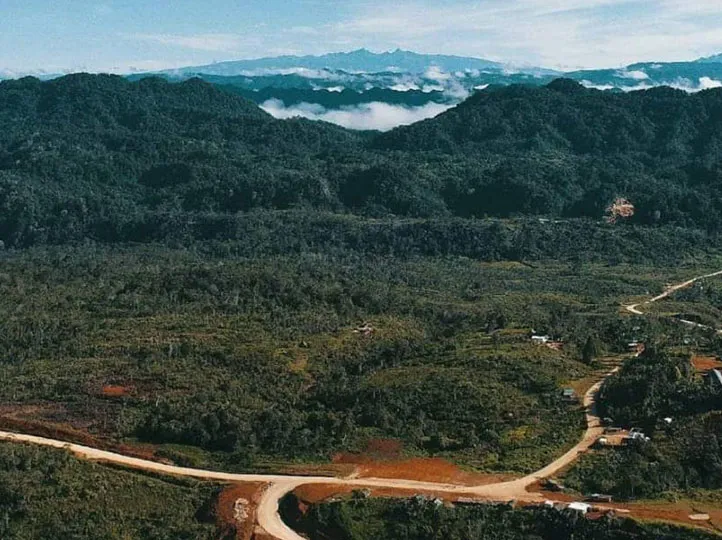
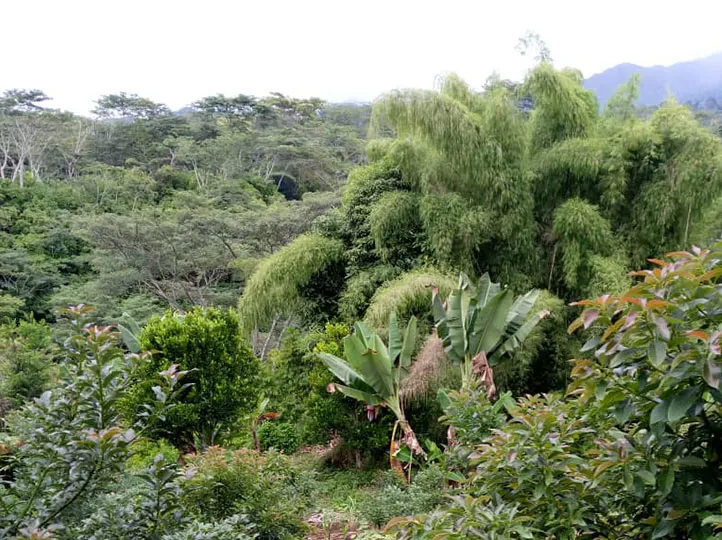
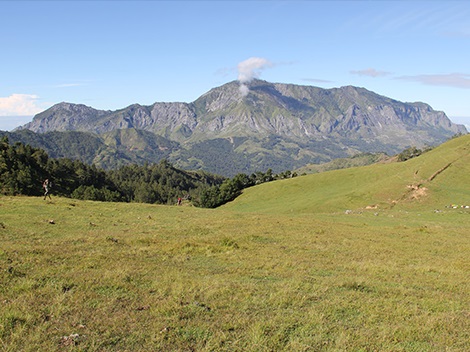
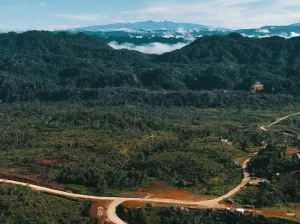
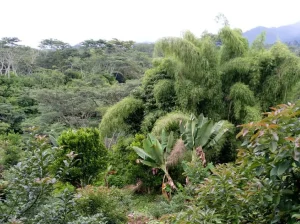
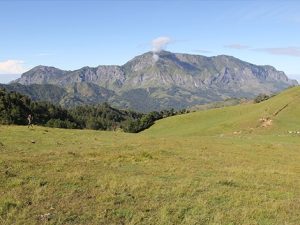
This is a washed peaberry coffee from Korgua Estate, owned and operated by Brian Leahy, who also owns/operates the Kuta Mill. The estate, which is located on the Kuta Ridge of the Waghi Valley of Papua New Guinea. Leahy’s father first explored this area in the 1930’s, and established Korgua as one of the very first coffee farms in the area. Korgua Estate was created on neutral ground to allow coffee growers from rival tribes to bring their coffees to market without causing disruption.
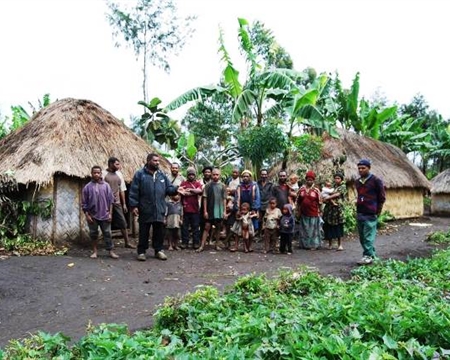
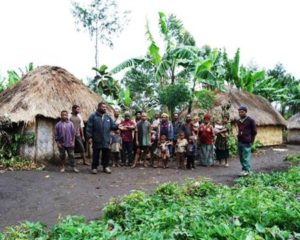
I met Brian at the Mount Hagen club on my adventures through PNG, a night I will never forget. This guy was one of the most knowledgeable coffee heads I have ever met on my journeys. At the time he was managing Kimel Estate, but has since left after he took over his families operations; Kuta mill & Korgua Estate. Lots of smart coffee folk in PNG but many have trouble sticking with it after finding success. A very different life and culture growing coffee in PNG and working with the local tribes. Brian has done a fantastic job and is one of the few we know, who would never leave. This is one of his mill top lots, wonderful tastes and differentiates itself nicely from the Carpenter Estate coffees.
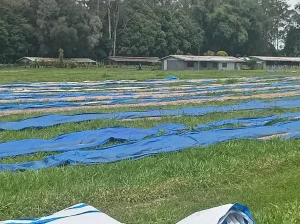
A key fact for understanding why the Highlands dominate the current supply is the research and distribution of seeds: in 1937, the Aiyura station was established, where the first Highland coffee was planted with Arabica seeds from Wau, and from there, seed distribution was promoted to different highland areas. In this ecosystem, washing plants and collection centers are the “link” that transforms dispersed production into a repeatable standard.
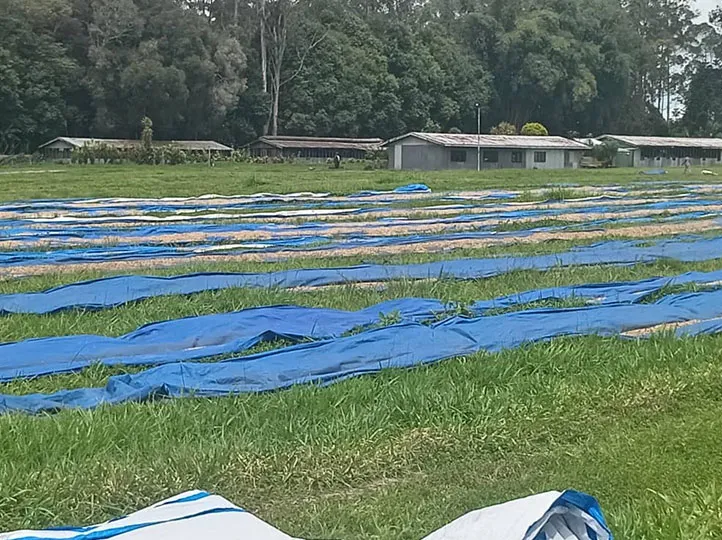
Although this lot is from a single estate, the key to the area is the role of Kuta Mill as a common processing and distribution center. The mill was established in a “neutral” location so that producers from rival tribes could deliver their coffee without interruption. In practice, it functions as a local collaboration: there’s talk of working together between Ulga and Kolga (traditionally rivals), and the mill reinforces quality with bonuses for those who consistently deliver well-selected cherries. This helps lots (including estate lots) maintain a more stable standard year after year.
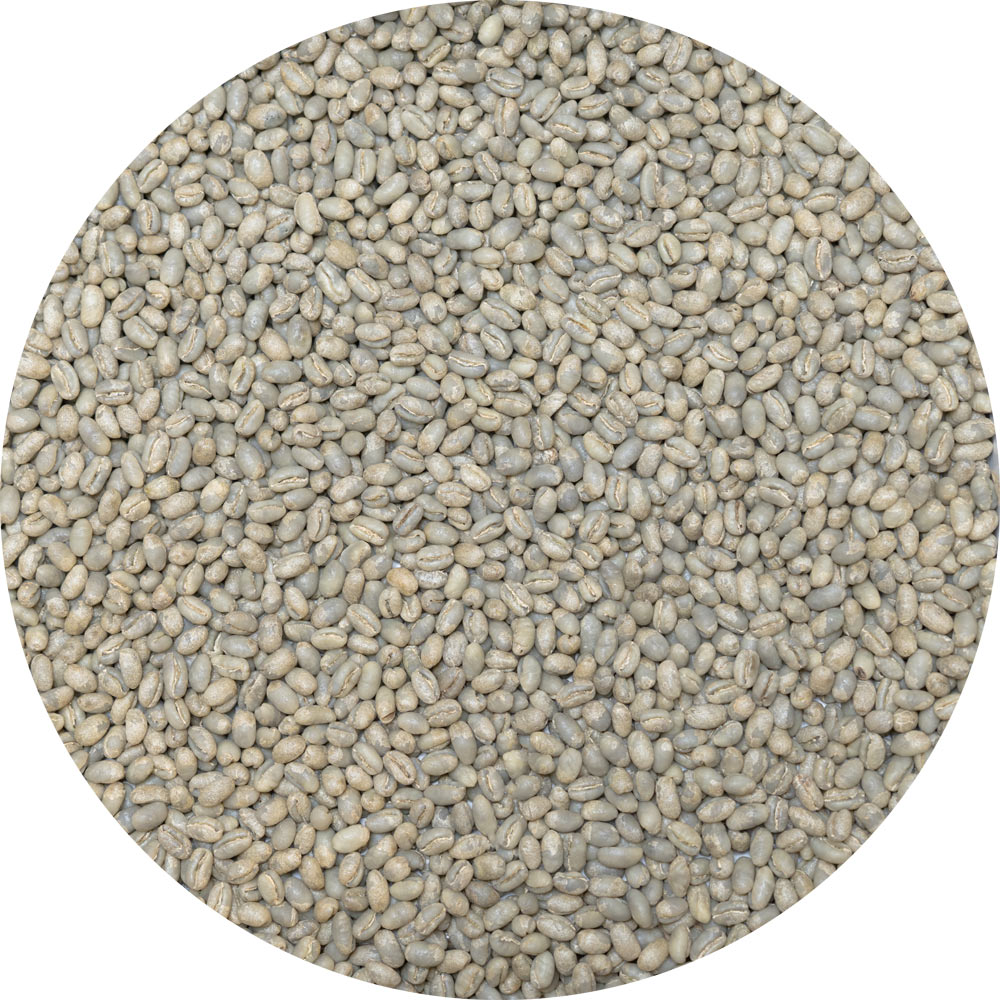
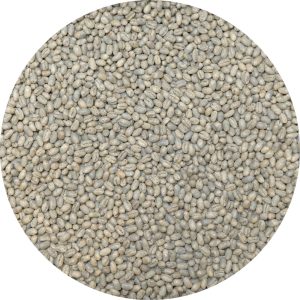
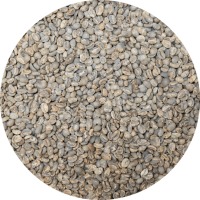
The peaberry is a natural mutation where the cherry develops a single seed instead of two; That’s why the bean is rounder and is usually separated by selection. It typically represents a small fraction of the harvest and, being more uniform in shape, can feel more “even” when roasted (and sometimes a little more concentrated in sweetness and body, depending on the batch).
Tasting Notes: Best right around a medium roast but will work from light to dark. A sweet and balanced profile, a hint of acidity down the red grape or golden raisins alley, hints of a maple syrup (burnt sugar) like sweetness. It has a smooth/creamy body and low to medium acidity. In light roasts, a slight citrus note and subtle floral hints may emerge; in medium roasts, it becomes more chocolatey with touches of caramel, cocoa, nut, and a light herbal spice. In darker roasts, it retains its sweetness and a pleasant smoky note may appear if it’s not pushed to a dry finish.
Roasting Notes: Because it’s a peaberry bean, it may “move” differently in the roaster and take on color faster than expected, so it’s best to be guided by the overall development and not just by appearance. It roasts very well from medium to medium-dark: In medium roasts, it maintains the fruit (grape/raisin) and maple notes, with clean chocolate and good creaminess. In medium-dark, cocoa/toffee and body increase, and the profile becomes more “comfort” without losing sweetness if you control the finish.
To learn more about PNG’s unusual coffee industry, check out our recent blog article “The Wild West of Coffee Production.”



Reviews
There are no reviews yet.