

Description
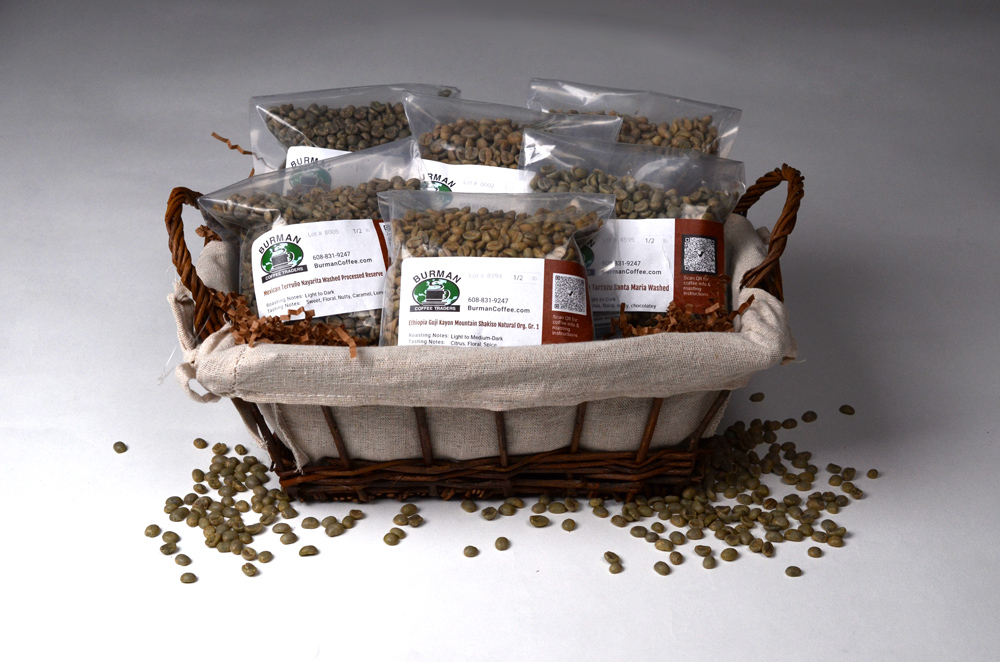
Don’t know what to try but like exotic tastes in coffee? Than this sampler is for you!
In this sampler you will find top notch coffees that definitely don’t taste like normal coffee. From fruity naturals to bold wet-hulled. This is a wonderful collection of coffee that will showcase how diverse coffee can taste.
Be warned though, exotic tastes always pull a love/hate relationship, these are all wonderful top notch examples but not everyone likes super exotic tasting coffee.
Nicaraguan SHG RFA Selva Negra Parainema – Washed Processed
Nicaraguan Selva Negra coffee is cultivated in the most ecologically sustainable and socially responsible way possible. Learn more by reading our Selva Negra Grower Profile.
This is the “fancy” version of their traditional washed processed. Parainema is a single strain of Arabica that is doing very well in Nicaragua and has won many competitions. A newer strain to Selva, it is really in better and better each year as the trees continue to mature. Very large bean size.
Selva Negra’s history is in many ways the history of the coffee in Nicaragua altogether. In the 1880’s the Nicaraguan government invited young German immigrants to come and settle in Nicaragua in order to promote coffee growing in the northern highlands. Many accepted the offer, thus forming the main coffee plantations of the country; some estates bear names of their motherlands. Selva Negra means Black Forest, and the coffee estate is called La Hammonia, Latin for Hamburg. Located approximately 4,000 ft. above sea level, La Hammonia has been producing fine old style Arabica coffee for over 100 years. Eddy Kühl & Mausi Kühl-Hayn, the farm’s proprietors are descendants of two of these original German immigrants Alberto Vogl and Klaus KÜhl.
Tasting Notes: A very clean and sweet cup of coffee. Medium to full bodied with just a little hint of acidity. Lighter roasts produce a pretty delicate cup with a hint more floral aspect than darker roasts with pretty soft hints of a chocolate/caramel undertone fading into some herbal spice. Medium roasts were a cup everyone would love with smooth chocolaty tones, a hint of malt in the aftertaste, on the sweeter side. Darker roasts produce a very cool sweet malty and smokey type cup much more full-bodied with a bit more strength to it. Really dark gets a bit edgy.
Roasting Notes: A good clean cup at almost any roast point but lighter roasts will show much different character than medium and dark. Lighter the cup shows some acidity along with herbal and spice notes. A medium roast brings forth smooth chocolaty tones and well developed sweetness, pretty low acidity. We liked it best just before 2nd crack kept it nice and smooth but built up decent body and the nice smokey malty tone.
Selva Negra Estate Coffee is grown at a high altitude in a shaded environment. This allows the bean to have a slow development cycle which instills an intense and fulfilling flavor to each bean. The coffee is not only 100% Arabica, but more importantly it is mostly Bourbon and Typica strains (which produce higher quality beans than other varieties of coffee trees). The region of Matagalpa, Nicaragua is mountainous with excellent volcanic soil producing exceptional beans. Finally, the coffee is prepared using an environmentally friendly washing process, which gives the coffee still one more unique quality enhancing aspect.
Papua New Guinea – Jiwaka Arufa – Natural Processed
From its earliest introduction to present day, the arabica gene stock in Papua New Guinea (PNG) is considered to be one of the country’s strongest natural assets, not to mention one of the best-preserved Typica lineage variety sets in the world. And these delicate genetics clearly thrive in PNG’s highlands, which are some of the most virgin and fertile on the planet.
Between World Wars I and II, Australian settlers would establish more and more large coffee estates across the Eastern, Chimbu, Jiwaka, and Western highland provinces. As commercial exports ramped up, more indigenous Papuans would adopt coffee as a cash crop alongside their traditional economies, in most cases processing at home and selling humid parchment to traveling collectors. For hundreds of thousands of rural farmers coffee would be, and still is, the very first and only source of western currency. To this day expert-level cultivation knowledge largely remains in the possession and experience of PNG’s plantation owners. Remote smallholder coffee tends to fall short of its potential, receiving only scarce quality interventions from ambitious millers and exporters.
Tasting Notes: It yields an excellent cup at any roast level, great from light to dark, Our favorite roast point was a nice medium roast, best balance of tones and very easy drinking. The aroma is distinctly fruity and complex adding wonderfully to the tastes. A lighter roast presents a sweeter cup, more dominate fruity/floral notes. A fuller body true to its PNG roots, a more pronounced citrus acidity, accompanied by unique red fruit undertones (evoking hibiscus flower and fruit peel), all balanced by an earthy, semi-sweet contrast reminiscent of malt. If the roast is taken a little further, the profile becomes more chocolatey and denser in body; it remains incredibly sweet, but with only a faint fruity hint less sharp eliminating much of the citrus character. Darker roasts exhibit a distinct baking-chocolate tone slightly smoky with a red fruit note, almost cherry-like, that emerges strongly as the cup cools.
Roasting Notes: If you are unaccustomed to roasting “Old World” natural-process coffees, be prepared to observe some unevenness in the roast and a high presence of chaff. This is typical for a coffee with these characteristics. Generally speaking, it is easy to roast; however, if you prefer a light roast, you must monitor it closely to ensure that not too many golden or pale-colored beans remain before cooling it out, otherwise run the risk of developing a slight almond or peanut-like nuance. The result is flavorful at any roast level (from light to dark). It is an expressive cup that performs much better if allowed a couple extra days to rest; really smooths out the cup and brings greater depth to the flavors.
Kenya Premium Kirinyaga – BCT Select AA – Top Lot
Growing the coffee is only half the battle to producing stellar coffee. What separates Kenya for most other producing nations is the way it organizes farmers into Farmer Cooperative Societies (FCS), basically every farmer, large or small, is connected to internal infostructure that gives them the support, knowledge and tools to grow the best coffee. These FCS’s are all locally owned, organized and run, letting them adopt to their microclimates and individual needs.
The last part, and equally as important but a little highly debated if good or bad, is the finally step in coffee production, the dry milling and auction system. Almost all Kenya coffees funnels through three processors, only one being owned by the Kenyans themselves. The good behind this, Kenya dry mills have some of the most impressive technology and facilities to produce absolutely stellar lots. In my travels I have never seen processing centers like they have in Kenya. One never sees bad export lots basically every lot is a gem. The bad, they are mostly foreign controlled and the FCS’s must use one of the three to end up with a final product. There are good laws in place to protect the farmers, but they have very little choice on how to finalize the processing and export the coffee.
Tasting Notes: A very clean and bright cup, silky-smooth mouthfeel that shines from the first whiff of honey sweetness to the final sip of bolder spice. Best served at light-to-medium roasts. A brighter, full flavored cup with great depth of flavor. Upon first sip, one will see a vibrant burst of lemon/orange citric comingling with a slight red fruit, quickly balanced by a creamy cocoa undertone with a little gentle black-tea like spice in the aftertaste. Underlying notes of roasted nuts and cocoa anchor the profile. As the cup cools the acidity softens and a deeper chocolate note swells, yet the honey aromatics persist, making every temperature stage deliciously consistent.
Roasting Notes: An easy-going bean with moderate chaff and even color. Keep it in the light-to-medium range if you’re after the fresh citrus pop and fruity nuance; these roasts showcase the red-lemon snap, blueberry sweetness, and honey fragrance while preserving a lighter, tea-like body. Taken to Full City, just shy of second crack, the fruit folds gracefully into rich cocoa and roasted-nut depth, yielding a silky medium body and mellow orange acidity. Pushed into second crack for espresso or cold-brew fans, you’ll land a cup of smooth bittersweet chocolate with low acidity and a subtle spicy edge. Let the coffee rest 48–72 hours after roasting: the citrus settles, the honey rounds out, and the cup shows its full character.
Ethiopian West Arsi Washed Gr. 1 – Refisa
Our first new crop Ethiopian of the season! A super clean, balanced, delicate and sweet cup you won’t want to miss. Washed Ethiopians are known for their delicate and floral profile at lighter roasts and this lot is a wonderful example. Shows hints of peach, floral and citric crispness upfront, balancing with a juicy body and nutty/chocolate undertones. Cups like this really showcase the heirloom strains that makes Ethiopia coffee unique and so special.
This coffee is sourced from smallholder farmers in the villages of Roricho, Bulga, and Solena, located in the surroundings of the Refisa Washing Station in the Nensebo woreda, West Arsi zone, Oromia region. The washing station is located within the village of Refisa itself which gives the lot its name but the coffee in this specific lot is grown exclusively in the immediately neighboring communities. Producers work plots averaging just 1 to 2 hectares, at altitudes between 1,900 and 2,070 meters above sea level. Cherries are hand-harvested and transported to the station often by donkey or horse where they are processed by SNAP Specialty Coffee under the direction of Negusse Debela. The station, founded in 2019, works with approximately 588 registered producers and operates 200 raised drying beds to ensure consistent, high-quality processing.
Tasting Notes: A delicate and bright cup with a surprising sweetness. At lighter roasts, lemon and a soft herbal tea notes take the lead, alongside mandarin, peach, and prominent florals like jasmine and coffee blossom. As the cup cools, the peach becomes a bit more intense, the acidity softens slightly without disappearing, and the cup stays clean and elegant, complemented by a honey-like sweetness and a soft caramel or vanilla finish. At medium roasts, the body rounds out and more chocolate-like notes emerge without sacrificing acidity or sweetness making this a very versatile coffee. However, we notice that at darker roasts the floral and fruit notes quiet down considerably, giving way to more chocolate and sweetness but at the cost of acidity and fruit.
Roasting Notes: Medium chaff, very easy to roast. Best between light and medium roast going too dark flattens the fruit and floral profile. On air roasters, a slightly slower development is recommended, as too fast a roast can push the cup toward herbal tones. That said, this is a very versatile coffee that performs well at any development percentage. A rest of 2 to 3 days post-roast is especially beneficial for the fruit and sweetness to fully express themselves, though after the first 24 hours most of its notes are already coming through.
This coffee is very high chaff and dense, which can cause issues in many home roasters. We do not recommend roasting this coffee in roasters that have chaff collection issues, and you will have to reduce your batch size in all the other roasters due to the higher chaff content.
This is a blender coffee, use 10%-15% to add caffeine to your personal blend.
This Robusta is a rich and bold cup, it is very full flavored.
A little earthy to be drinking it by itself but it will add a lot of character and caffeine to your favorite blend.
The Indian Monsooned Malabar is a very unique and exotic coffee; usually people have a love/hate relationship with this bean but it is one of our top sellers year in and year out.
Monsoon Malabar coffee is prepared from Arabica cherries (“cherry” refers to dry-processed coffees in India). After grading, the coffee is transported to the coastal city of Mangalore where the “monsooning” is carried out in large openwalled warehouses.
During the rainy months of June through August, the coffee is spread inside the warehouses with very good aeration and ventilation at a particular thickness so that the coffee slowly absorbs moisture. After it absorbs sufficient moisture and bloats in size, it has to be periodically bulked and bagged and stacked so as to ensure proper and uniform “monsooning.” This process has to be carried out many times during the months of the monsoon.
After September, when the rains subside and the temperatures are higher, the ghostly white and swollen beans are sent through the final grading (gravity tables and hand-sorting) in order to obtain the Malabar export quality. The farmers not only produce coffee, they also grow pepper, cardamom, and oranges. Most of the farms are 80 to 100 years old and belong to third generation growers.
Tasting Notes: The Indian Monsooned Malabar is a very low acidity, thick and creamy, overly earthy style cup of coffee. There is a lot of sweet tones in this cup depending on the roast and one can taste a little hint of the natural processing soft fruit tones and classic Indian spice notes. A pretty wild cup for you stronger coffee fans or espresso heads.
Roasting Notes: Usually used for espresso at the darker roast points but many of our customers enjoy the single origin drip brew or french press at a slightly lighter roast point.


Reviews
There are no reviews yet.