Description
A very slow dried, exotic, Ethiopian natural, filled with sweet fruit, oak and boozy notes along with floral and chocolate like characteristics. A full flavored more extreme natural, especially for Ethiopia, which normally produces very delicate cups. Still a refined cup comparatively to other origins “wild” naturals, beautiful screen of coffee, even roasting but high chaff.
Bokasso is one of the primary cooperatives belonging to the Sidama Coffee Farmers Cooperative Union (SCFCU), one of Ethiopia’s largest and best-known exporting organizations. SCFCU is robust; there are 53 member cooperatives in the union and over 80,000 member households throughout the Sidama Zone. Harvest in Sidama occurs slightly earlier than in the more southern zones of Gedeo and Guji, and as a result the fully washed lots from here are usually the year’s very first top quality arrivals from anywhere in Ethiopia.
Bokasso carries out activities that often go unnoticed but are crucial for small producers, including training producers in best organic practices and investing in basic infrastructure needs like road improvements and establishing local warehouses. SCFCU focuses on establishing a certification process for local cooperatives, creating micro-credit for producers and investing in social programs on a larger scale. Environmental training programs, healthcare initiatives, life insurance, and educational opportunities are just some of the ways SCFCU strives to improve the quality of life for coffee producers and their families.
Tasting Notes: No missing the more wild natural processed tones in this cup. Best served at the light to medium roast levels. A bit of citric crispness upfront that quickly fades into a sweet fruity note, the lighter tones balance with a boozy complexity, think oaky barrel aged like tones, with more traditional nutty/chocolate like tones in the aftertaste. Wonderful depth of flavors and a clean tasting cup from light to dark. With its more potent tastes, a longer setup will help smooth it out the cup and reduce some of the wild tones. Light roasts themselves will show a little higher acidity, lots of citric and fruitiness, balances more on the nutty side of things. Medium roasts promote a bit more chocolaty factor, reducing some of the citric acidity, bringing out more of the barrel aged darker toned complexity with fruity highlights. Dark roasts are interesting but can get a bit bitter as you enter second crack, assuming you like stronger edgier coffee, can be a unique treat for dark roast fans.
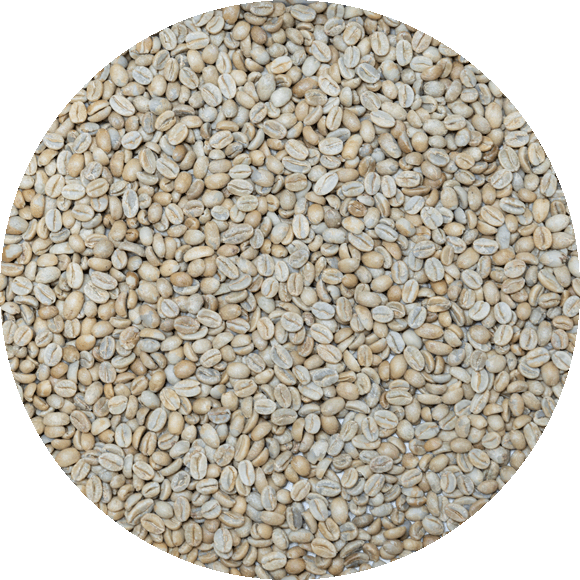
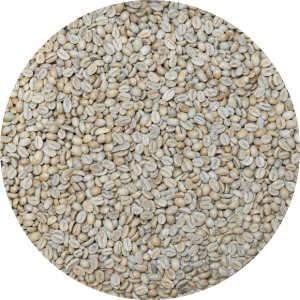
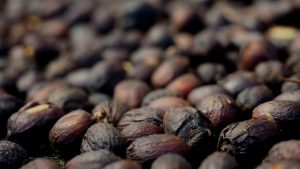
Roasting Notes: A beautiful screen of coffee for a slow dried natural, even roasting but will have a higher chaff content. With higher chaff, for most coffee roasters, make sure to reduce batch size a little and keep a close eye on it. Can be a little wild with very quick and light roasts, a good coffee to get a little slower development on.
There are 1879 farmer members belonging to the Bokasso cooperative, one of the union’s larger in both membership and output, along with the mighty Fero cooperative. Together these larger coops are some of the few sources of natural process coffees from Sidama. Farmers in this area are truly smallholders, averaging less than one hectare of coffee cultivation each, in which they also produce vegetables for the household and local sale.
Bokasso carries out activities that often go unnoticed but are crucial for small producers, including training producers in best organic practices and investing in basic infrastructure needs like road improvements and establishing local warehouses. SCFCU focuses on establishing a certification process for local cooperatives, creating micro-credit for producers and investing in social programs on a larger scale. Environmental training programs, healthcare initiatives, life insurance, and educational opportunities are just some of the ways SCFCU strives to improve the quality of life for coffee producers and their families.
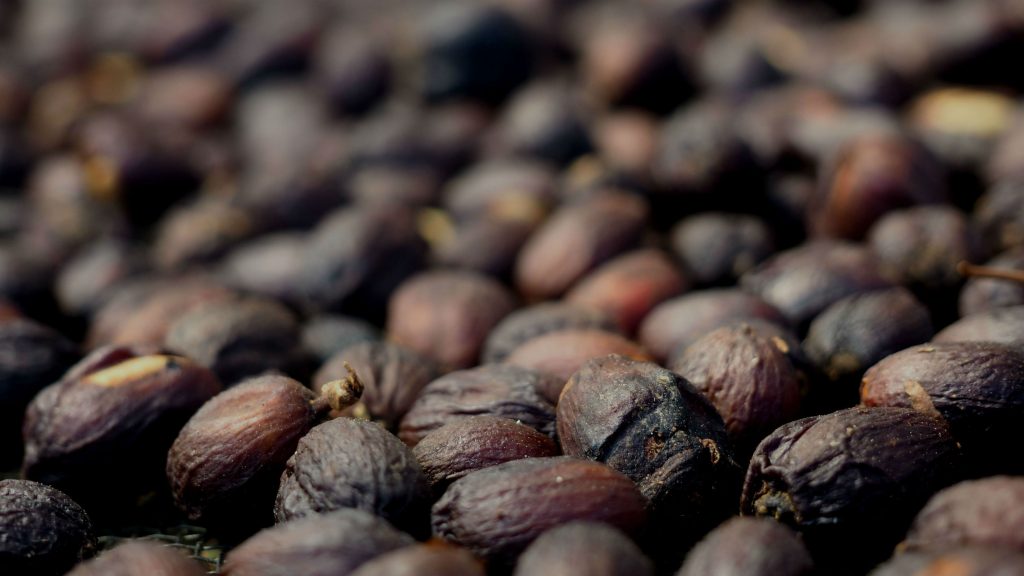
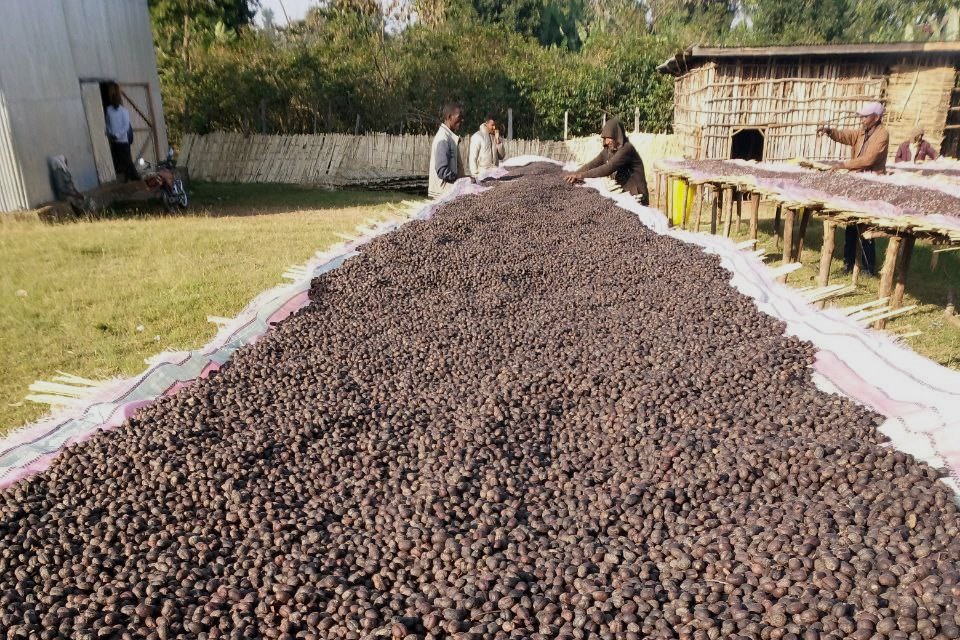
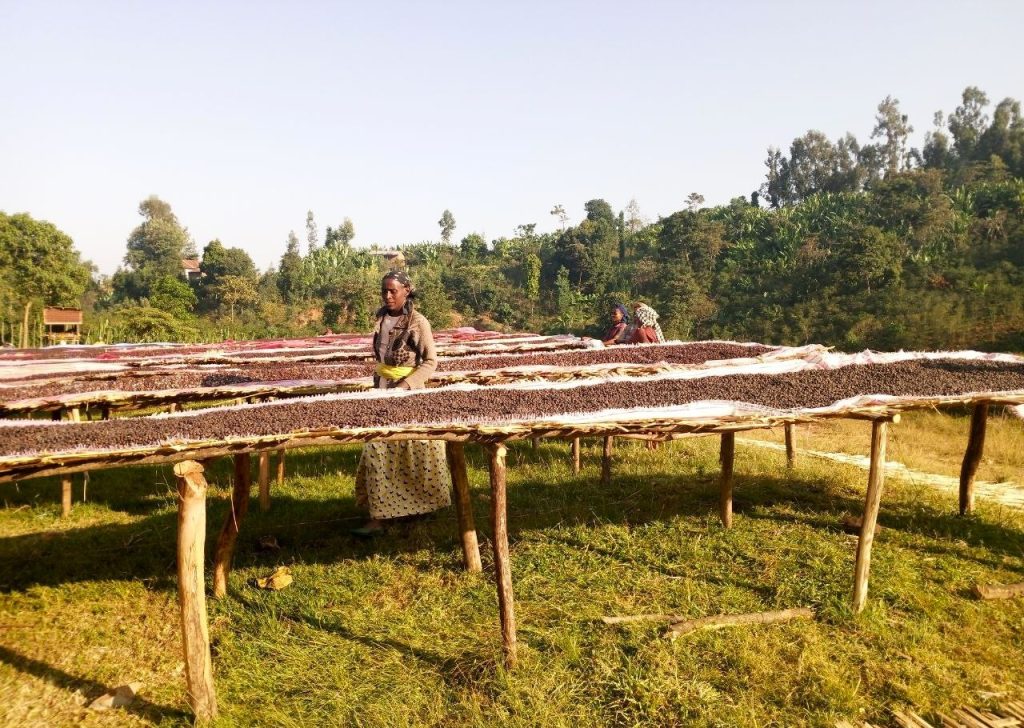
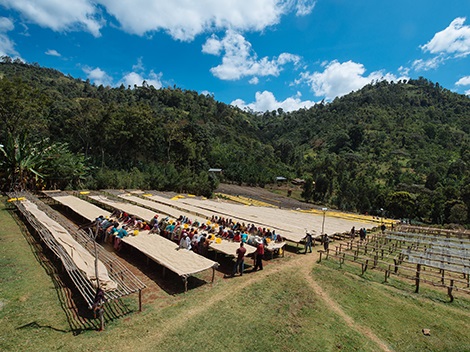
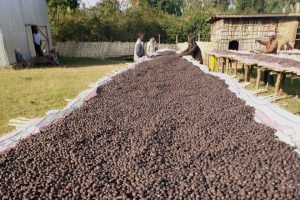
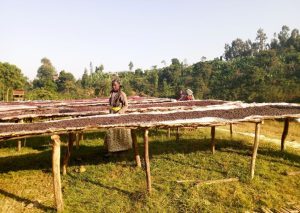
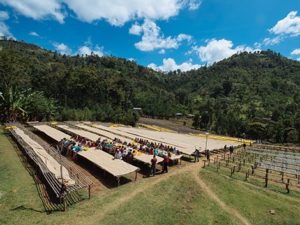
In processing, unlike in most of Sidama, Bokasso willingly invests in the necessary resources to produces clean and high quality naturals. One of these resources is drying space: full coffee cherries are greater in volume than the seeds alone, not to mention naturals need to dry slowly in a single layer, which, when combined, necessitate many more raised beds for an equal output of coffee. The other is labor: Bokasso employs over 100 people at the station to oversee the constant maintenance of large-scale parchment and cherry drying.
Bokasso was founded in 1976 and functioned independently, as did many coops and processing groups back then, for lack of a greater export network. This lasted until the late 90s and relied largely on a system of local collectors and buyers, who would then deliver consolidated cherry to processors or export auctions. The formation of cooperative unions in Ethiopia allowed for voting power and higher farm returns from the direct exportation that unions would be capable of. Certifications, as well, easily earned through the organic methods of Ethiopia’s smallholders and a conscious business plan, could be secured for price protection and marketing purposes, helping vast populations of smallholders gain small but meaningful leverage in the global marketplace that remains to this day.






Reviews
There are no reviews yet.